–
Dear Members,
We are already in the last days of June and so the time has come to tell you about the action taken by your association during the first semester of 2011 that has just come to an end.
We were focused principally in two areas:
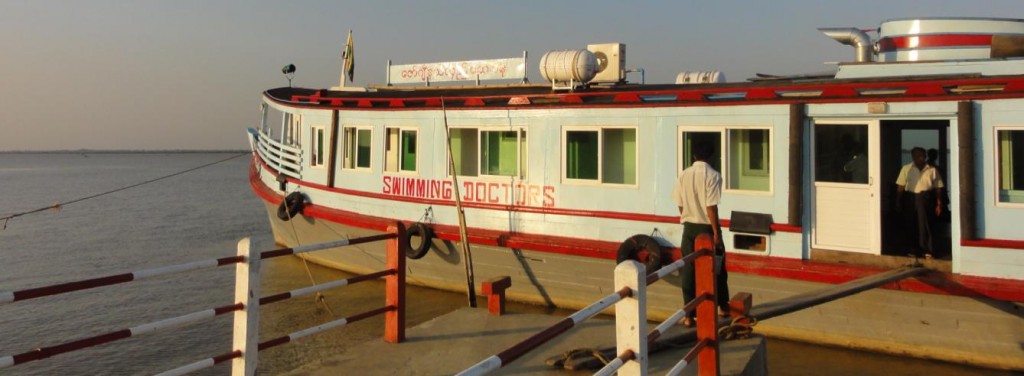
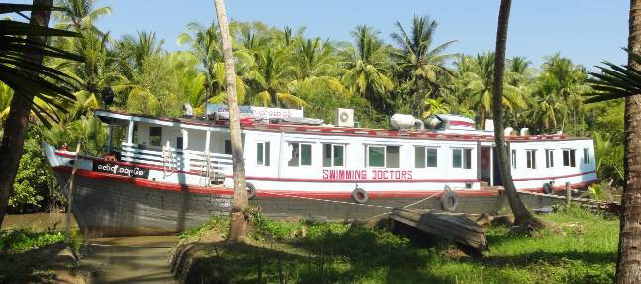
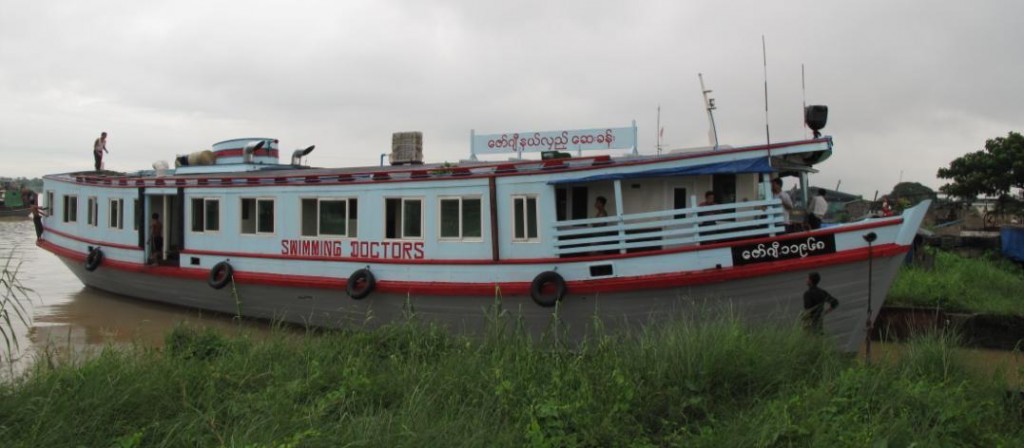
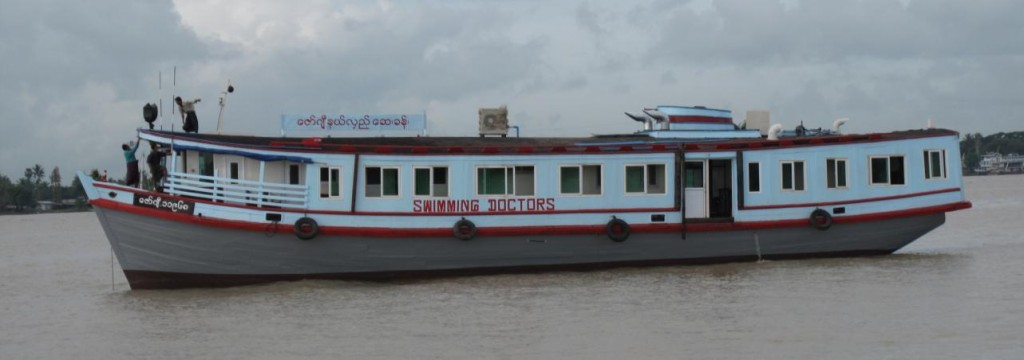
1- The running of our first boat clinic, “Swimming Doctors”
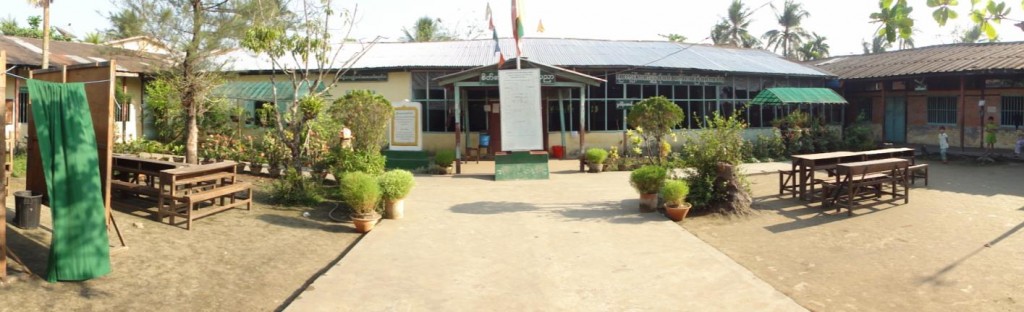
2 – The renovation and expansion of a school of 2500 children located in North Okkalapa, one of the deprived areas of Rangoun.
–
1 / SWIMMING DOCTORS
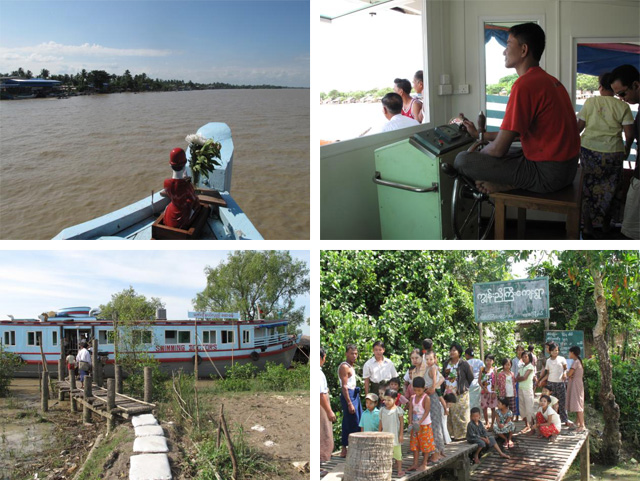
The first mission of the year began on January 4th, aiming to be finished by the 24th. We had at that point only one doctor on board, the second having left for further study in Malaysia. We treated 726 patients, 29 of which were cared for free of charge, an average of 37 people a day. The patients made it on board either from the shore or by boat if they were travelling from a neighbouring village.
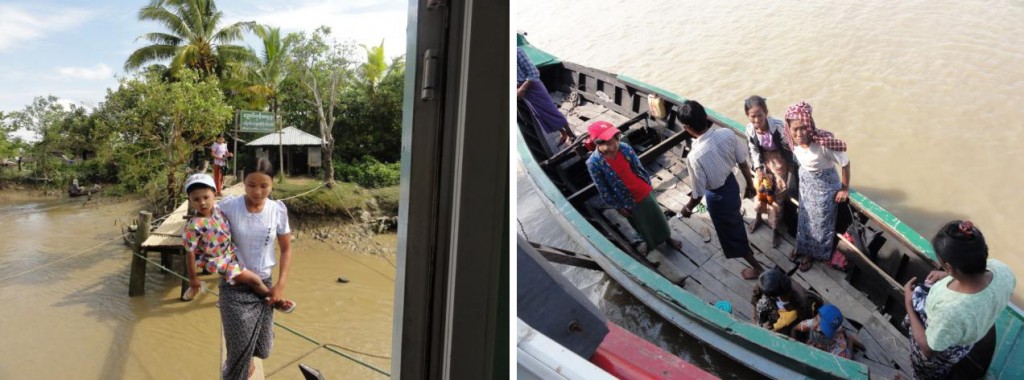
I won’t bore you with all the detailed numbers and statistics of each mission but bear in mind that since January 4th right up until the day of writing this current newsletter which comes in the middle of our eighth Mission which departed on June 17th, 4030 people have been treated in total, or an average of 30 patients each day.
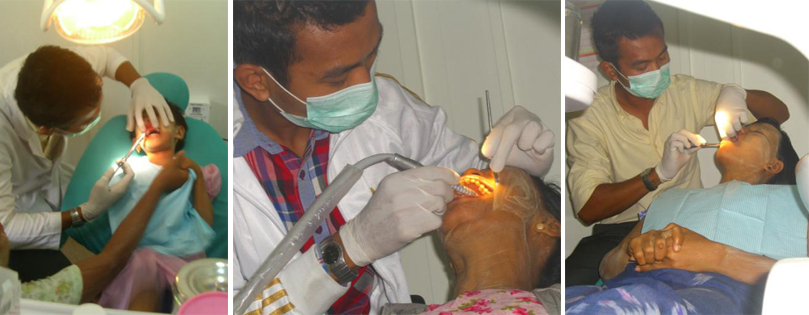
Thanks to the almost daily little interventions carried out on board, from stitching cuts to plastering broken bones, the everyday accidents that occur in the populations of the villages around the delta don’t have the serious consequences that they would probably have otherwise.
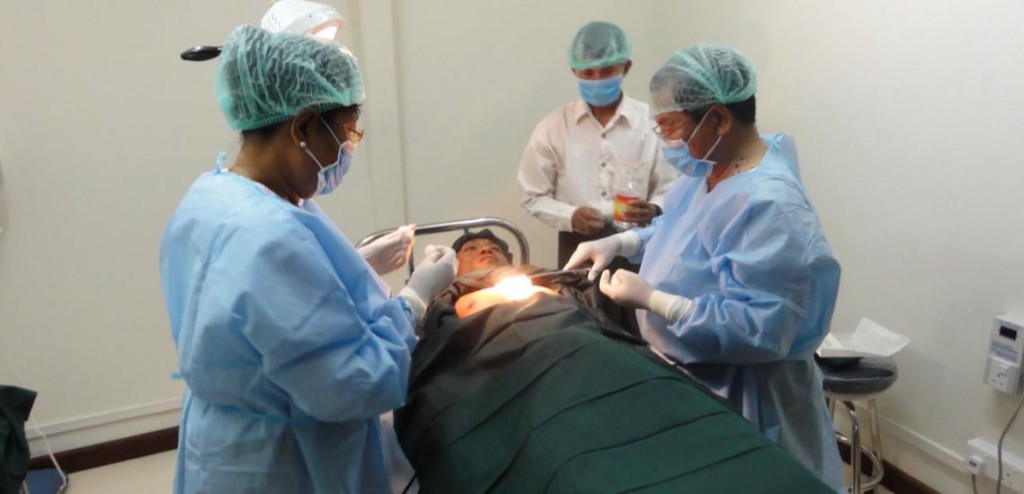
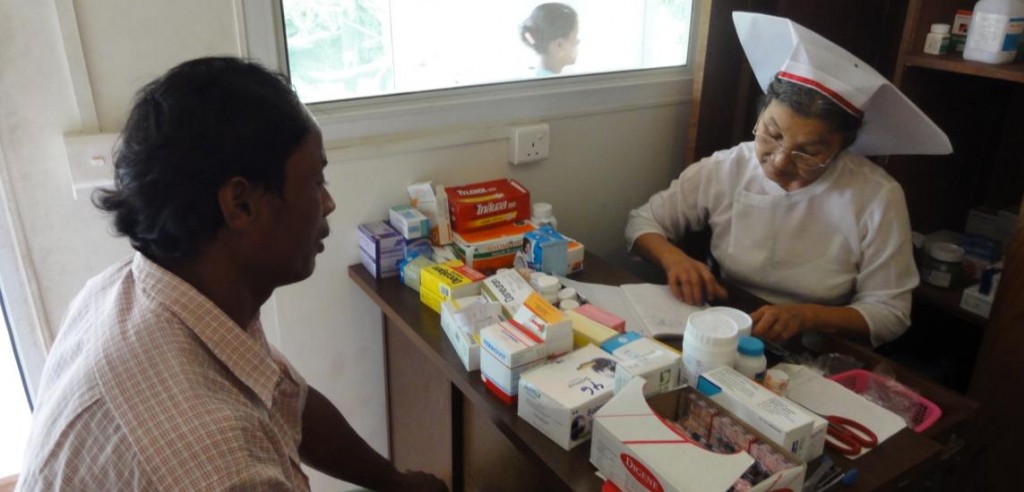
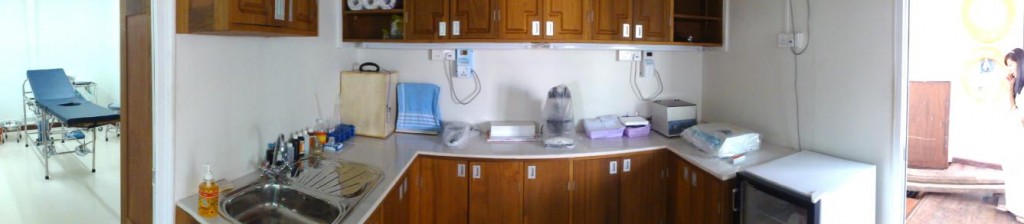
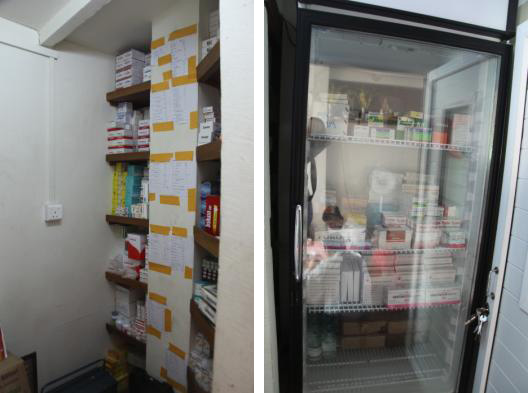
The medicine is distributed by one of our nurses and only the correct dosage, in pill form, is prescribed.
The laboratory has also played an important role. In almost every mission we have identified patients suffering with Tuberculosis, patients who are HIV positive and cases of Hepatitis B and C.
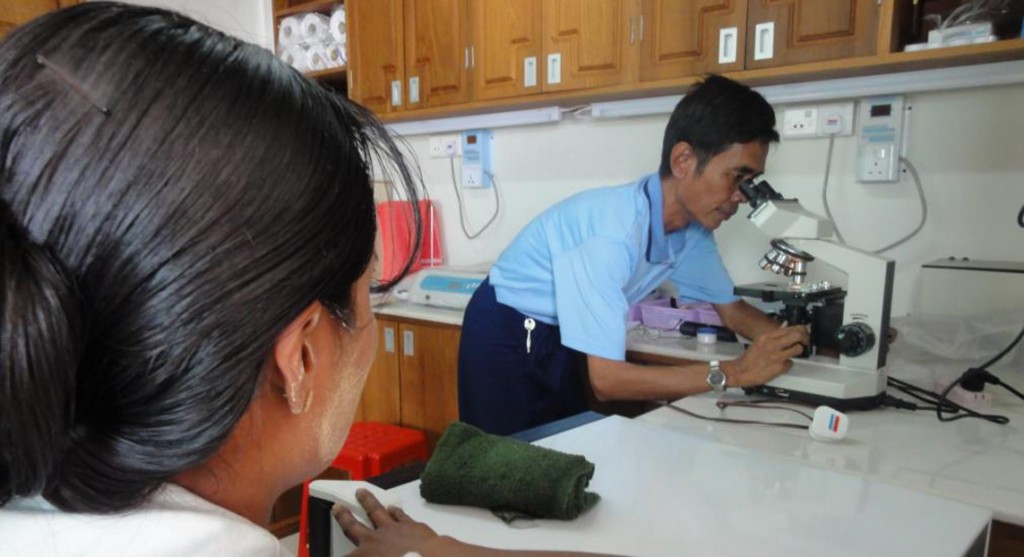
We send those diagnosed with TB to the Myanmar Rangoun public health services who treat the illness free of charge.
We send those who are HIV positive to specialist NGO units which benefit from international public donations to treat this illness, distributing free triple drug therapies. For hepatics, in addition to the available treatments, the team give educational classes on the importance of their behaviour in order to not pass on the illness to their loved ones and sexual partners.
The social calendar this semester has been full to the brim.
It began in February when a German team came on board to make a documentary film on the relief brought to villages by the Swimming Doctors. This video was made for the association STIFUNGLIFE, an important supporter of our actions, it’ll be ready to watch by August on our website www.zawgyicare.org
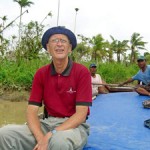
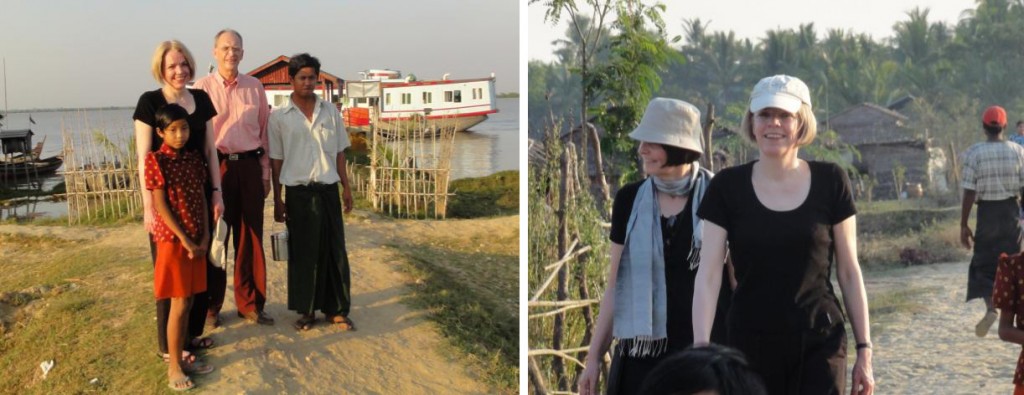
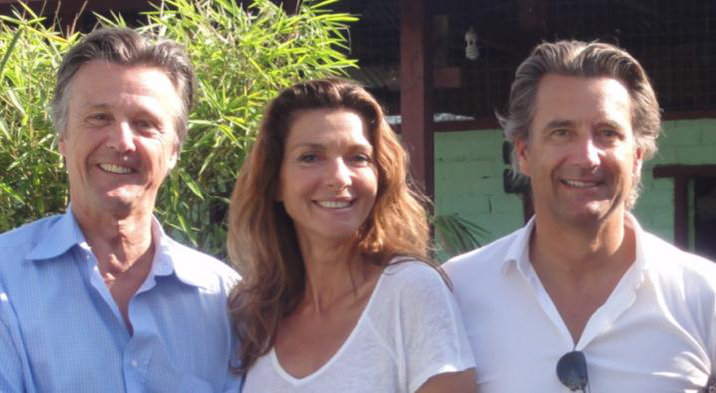
We also had aboard the Director of research at Laboratoires Roche (on the left in the photo), accompanied by her sister who works as a producer for the main public television channel in Germany.
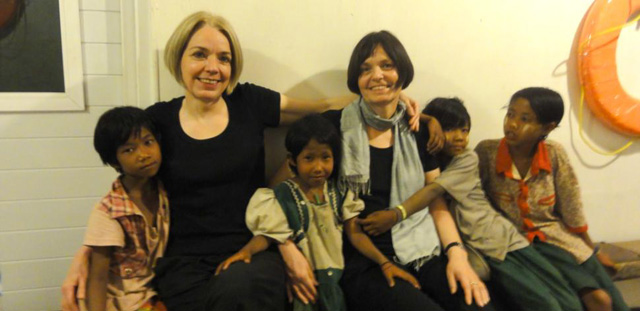
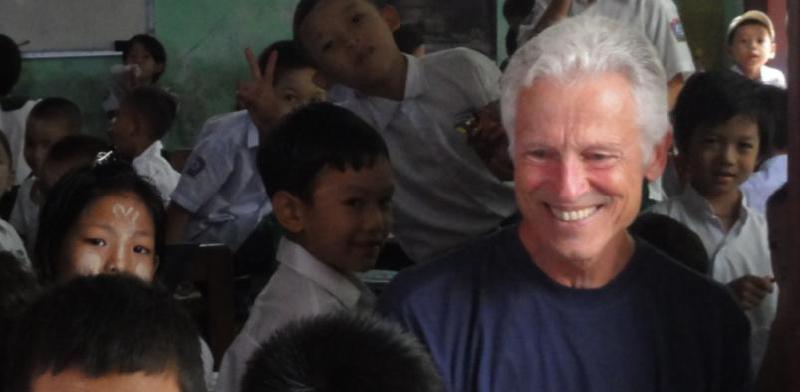
Adopted immediately by the children, they lived on board for two days to the steady rhythm of the Swimming Doctors. They also learnt about the lives of two villages in the Irrawaddy delta.
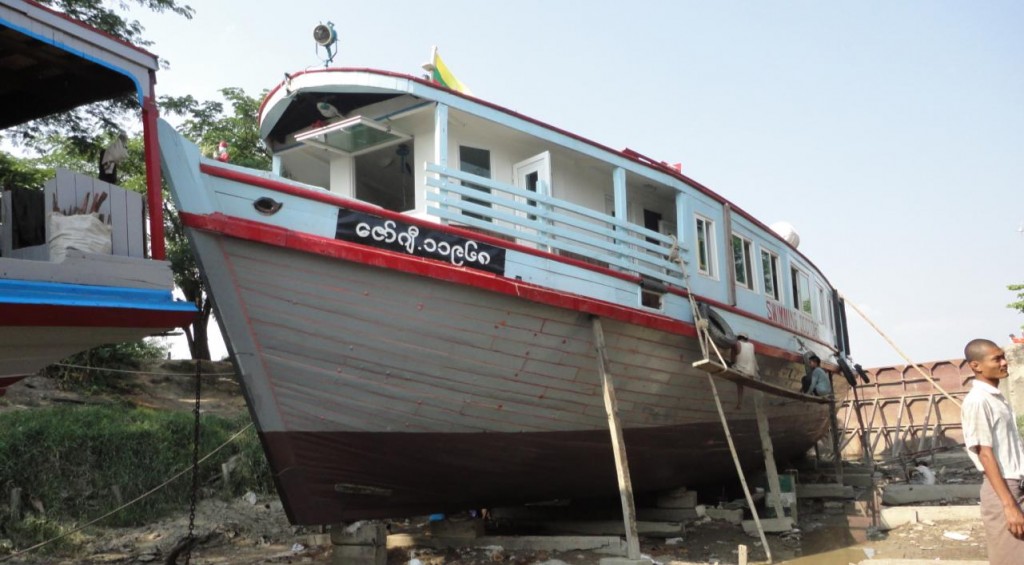
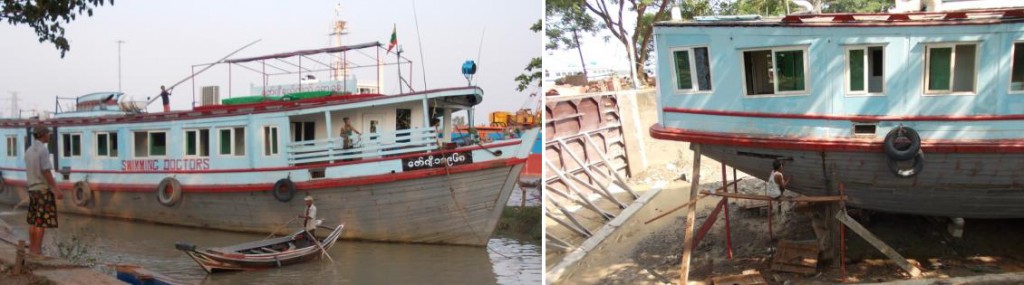
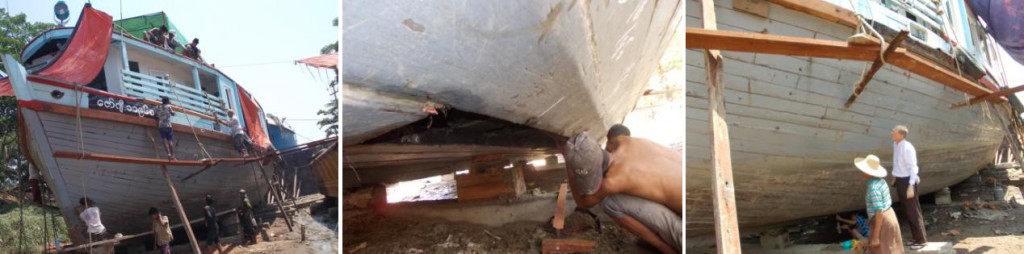
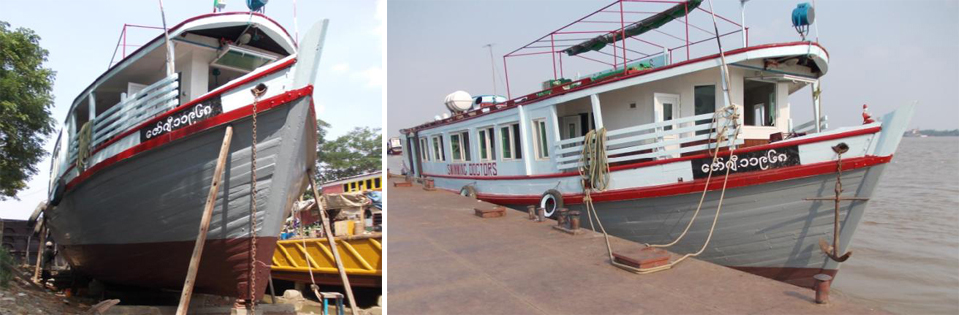
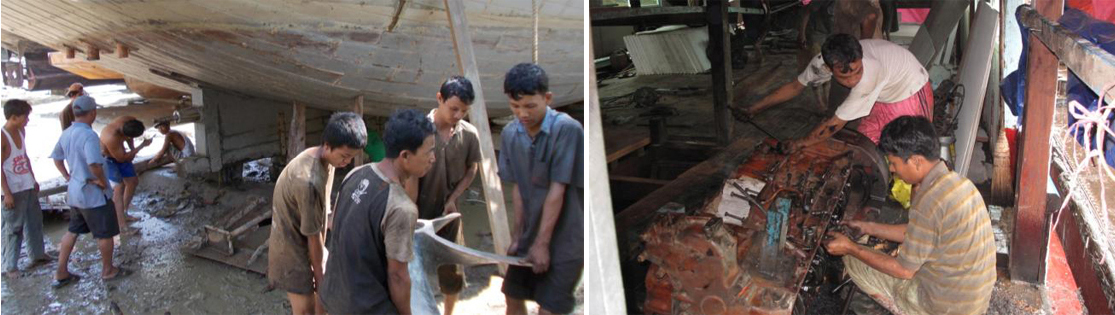
Another surprising occurrence this semester –although a much less pleasant one- was the appearance of a major structural problem in the hull which meant we had to stop for a month, from the 23rd of March to the 22nd of April, and return to the shipyard.
We had to strengthen the entire hull, make the mainstays more rigid and recommence our efforts to check the latticed metal girders along the ship.
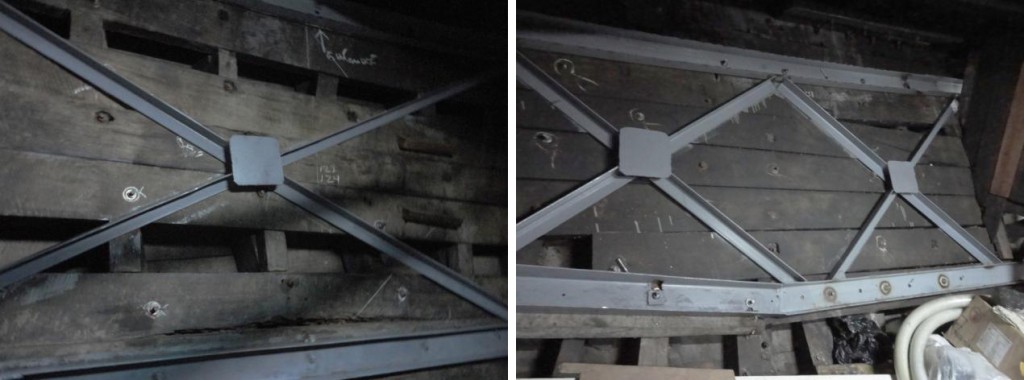
An expenditure that was as unforeseen as it was expensive but which couldn’t be put off any longer if we were to ensure the ease and safety of future missions.
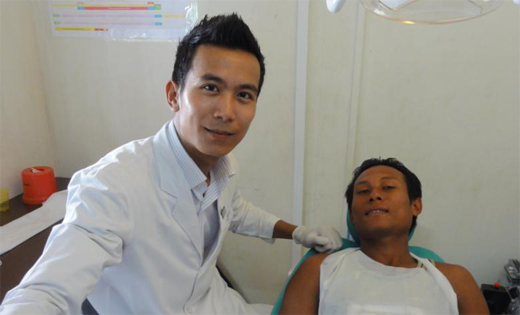
During this stop we found and hired a young female doctor of 27, who had been working for two years for a denominational charity.
As the boat was out of action, we put to good use this wasted time to send our latest recruit on a training course in order to learn how to properly use the on board ultrasound scanner. She was trained by the Director of Radiology at a clinic in Rangoun which had the same equipment as us. Our Burmese patients, like undoubtedly those from many other nationalities, prefer to have a woman conduct this procedure.
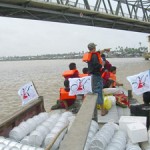
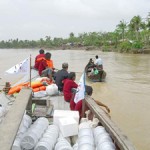
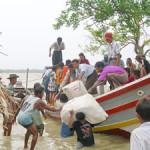
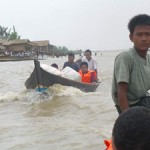
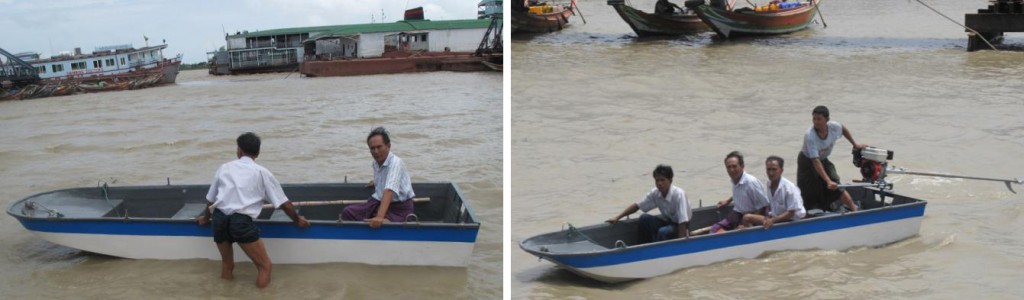
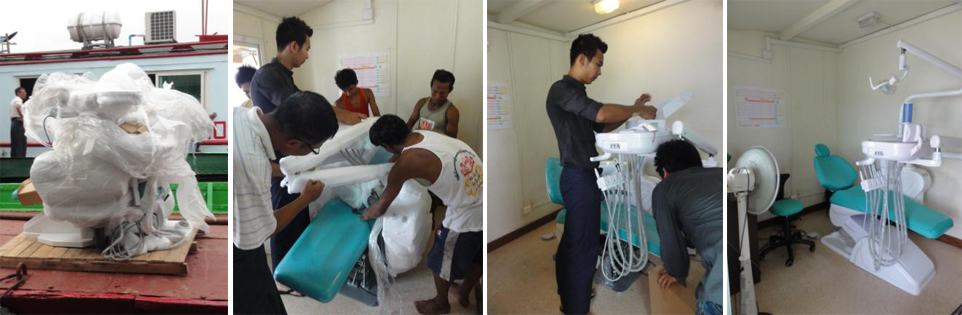
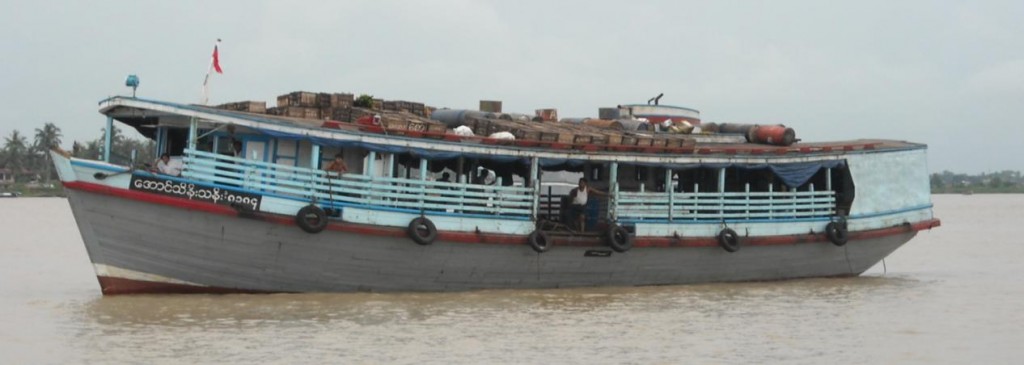
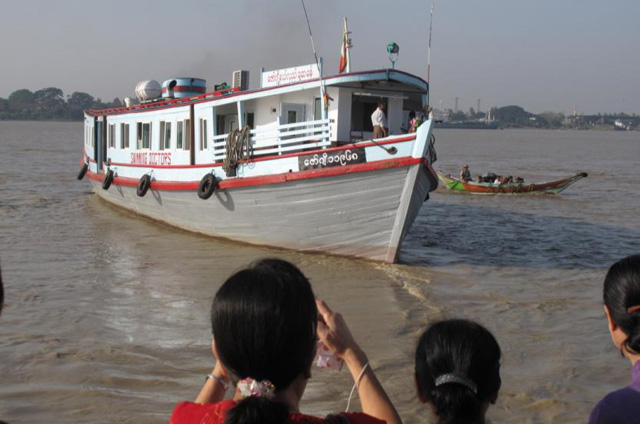
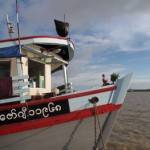
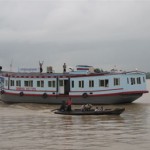
So that the medical team can be independent of all external help when going to care for people in villages that are inaccessible by river, we bought a smaller boat. These pictures were taken during the most recent journey of the boat to Rangoun.
It will interest you to know that during missions 6, 7 and 8 which took place during the rainy season we had half the daily number of patients.
There are two reasons for this : one is that people travelling for a consultation by boat are often fearful of the weather conditions which make the use of their small and fragile boats in the delta very dangerous, the other for financial reasons despite the smallness of contribution we ask for.
The rice farmers are between two harvests, stockpiles are low and it is almost the time to gather in before next November. This explains why the cases treated during the harvest season are often much more serious than in the dry season, and also why we see less children.
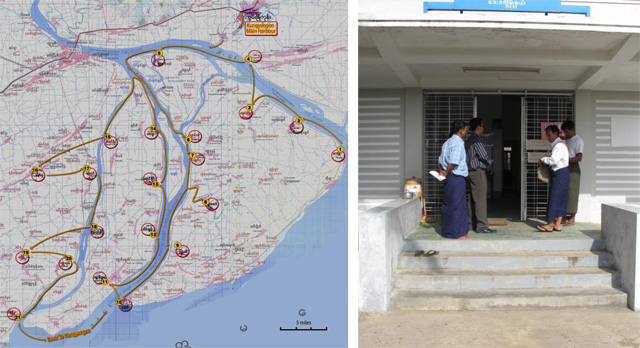
Contrary to what I thought before, if we stick to the time-schedule of our missions thus far we won’t be able to stop at all the villages that we initially thought. Moreover, we have used the experiences of our first missions to adapt to the needs of the rhythm of the journeys. We stay two days and sometimes three in each village to allow the sick from neighbouring villages to come for an appointment.
The very positive point to make is that the structure of our missions has been spread, and it is known that we always travel within the same stretches of the Irrawaddy, that the cycle of our missions is now fully integrated into the heart of the populations and families daily call at the boat to find out either when we next return or to ask which villages we stop at closest to where they live.
During the second semester we will add to the already provided treatments and interventions the distribution of reading glasses generously offered by the organisation STIFUNGLIFE.
Just-in : Facts and figures for “Swimming Doctors 1”
The average expenditure per patient funded by your organisation is 7 euros.
This includes: the wages for the medical team and the ship crew, as well as the total cost of running and maintaining the boat not including major repairs and the fairing, which must be carried out twice a year.
From next July to December, Swimming Doctors will undertake 6 missions of 22 days in length each and spend 3 weeks in the ship’s yard for fairing. It should provide medical assistance to more than 4000 new patients.
All these figures give you a much clearer idea of the financial needs of your organisation so that it can continue to promise help to the populations of the villages around the Irrawaddy Delta.
2 / NORTH OKKALAPA’S SCHOOL NUMBER 7
I now want to talk to you a little about how we came to invest also in the renovation and expansion of a school of 2500 children situated in North Okkalapa, one of the deprived regions of Rangoun.
Two years ago, Phyo Phyo Wai, who had worked for 12 years as a maid with the family of one of the partners of Zawgyi House.
Having household staff is normal in Burma even in poorer families. As her relationship with the mother of the family was difficult, my partner suggested to me that we hire her instead, give her an education and maybe the chance to do something more with her life than being a servant.
I agreed on the condition that she go back to school to finish her studies that she’d abandoned too early, hoping that perhaps she could continue with university study if her results were good.
As her family didn’t live in Rangoun, we had to find a school that would accept her. It was thanks to the sister of one of our dressmakers who is a teacher in School Number 7 in North Okkalapa that she was given a place, but in the same class that she had been in before stopping school, therefore at the disadvantage of being two years behind her classmates, although with the advantage of being more mature.
Last December, the annual school prizegiving ceremony took place to give prizes for the previous academic year ending in April 2010. As Phyo Phyo was a winner, I went with Phyo and the dressmaker to receive the award.
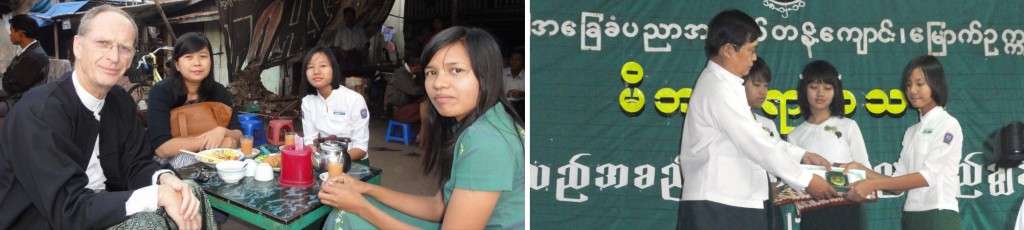
All the prizes having been distributed, the school headteacher made a speech during which she discussed the appalling conditions in which the children had to work.
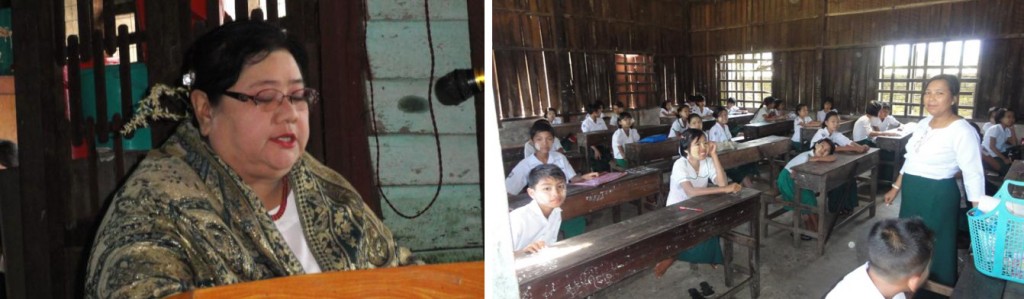
Leaky ceilings, damaged premises, a playground flooded in the rainy season etc.
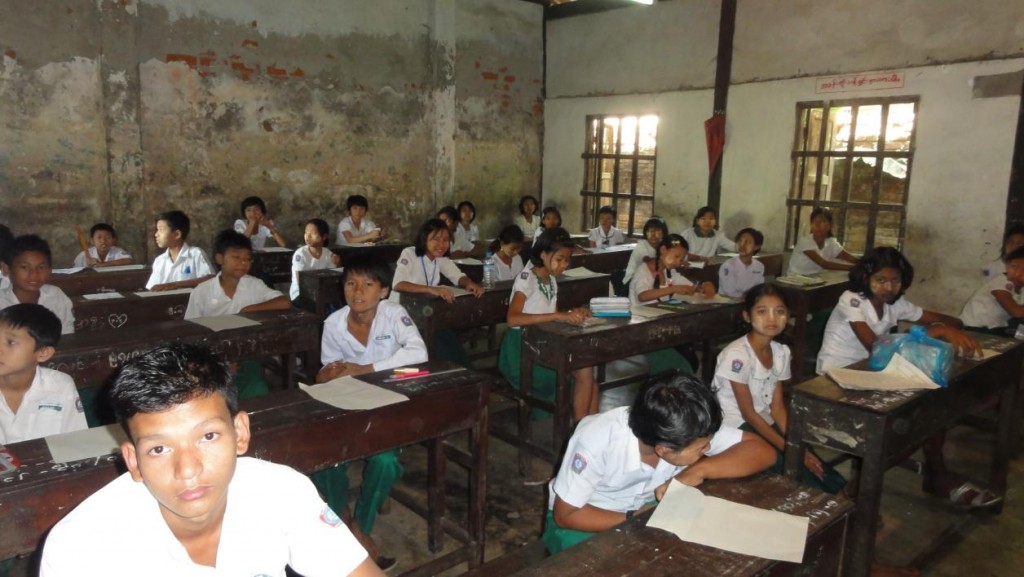
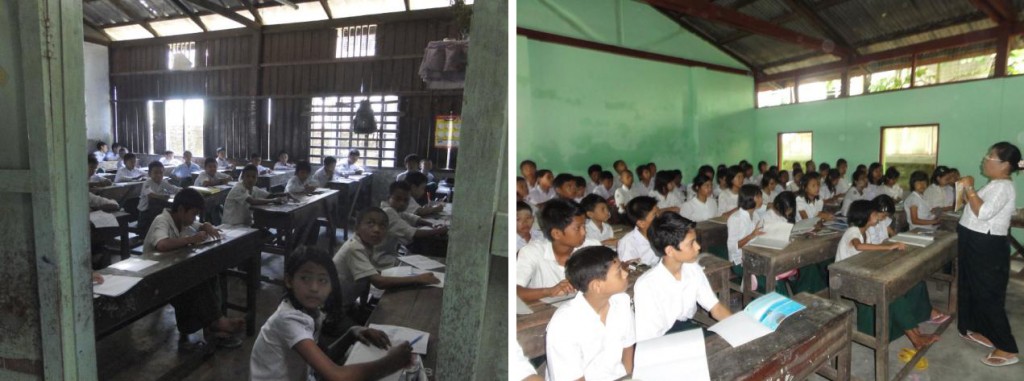
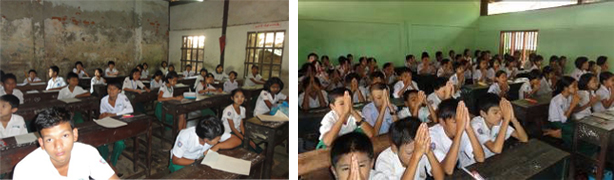
Such conditions are further aggravated by the ongoing construction of the last two years of four concrete roads surrounding the boundaries of the school. These roads are 30cm higher than the ground level of the school. The result is that in the rainy season the classrooms are flooded to such an extent that the children must bring in a bench. Whilst sat behind their desks they rest their feet on the benches so as not to have them in the water during lessons.
This appeal to the generosity of the residents of the disadvantaged local area is a blot on the otherwise celebratory atmosphere of the ceremony and the inspection of the premises which followed convinced me that we should try to do something to help.
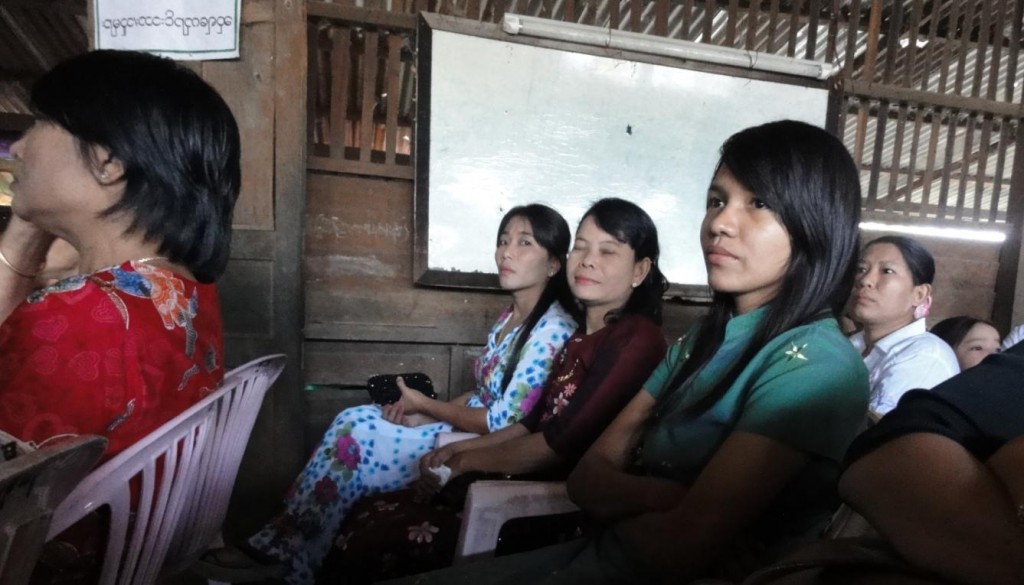
At the beginning of January I contacted Mr. Gessner, the president of the German organization STIFUNGLIFE which runs a programme of renovation and construction of schools in Myanmar, to propose the project. The schools that the organization funds are all located in the rural region of Pagan. The chance to participate in the renovation of a school situated in the Rangoun suburbs quickly gained his interest as with no time to spare I went ahead making appeals for donations. By the second fortnight of February, Mr. Gessner was in Rangoun. He was able to visit the school with an estimation of the costs in his head. Works to raise the classrooms and the surrounding link roads, structural and roofing repair as well as changing the entire roof in three of the buildings comes to about 15 000 euros. A sum that we allocated to STIFUNGLIFE to realise the project.
On the last day of the school year which runs from June 1st until February 28th for secondary schools, we were ready. By the time we had obtained the necessary authorisations from the academy and the town, the work began on March 18th.
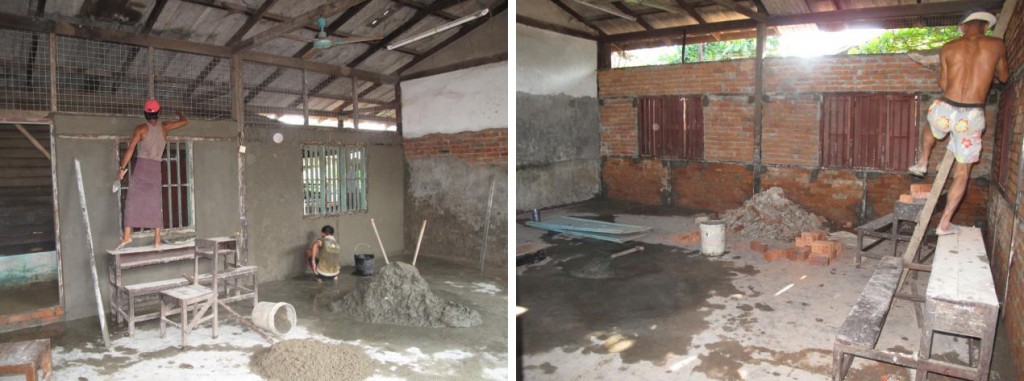
Since our work began, we have been able to benefit from giving the classrooms more daylight, altering the access traffic and improving many details which make the life of both the students and the teachers more comfortable, even if the term may seem to some of you a little exaggerated.
From April 30th, the first classes will be refurnished.
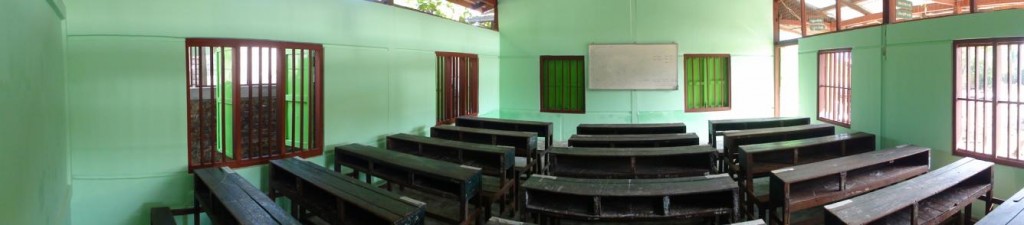
Two weeks before their return to school, when the teachers had begun work again, everything was completed. These two ‘Before’ and ‘After’ pictures say more than a lengthy description could.
Throughout all the work, I had numerous meetings with the headteacher of the school, who lives on site. We talked about the difficulty that she had providing quality teaching whilst being obliged to split the classes up due to a lack of space, dividing up students and teachers into two teams one in the morning and one in the afternoon. Furthermore, as the population of the area is rapidly growing, many classes had too many pupils, and it was becoming a real problem. The solution would be to have new classrooms. The available ground space would allow the creation of a new two storey building, which would create 8 new classrooms. With the entrepreneur, we got back on our computers and soon the first plans were made.
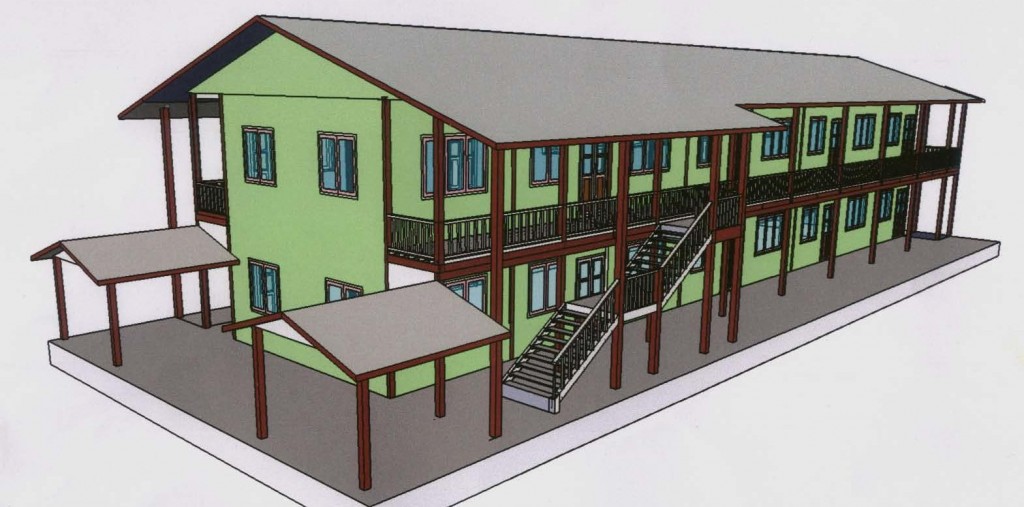
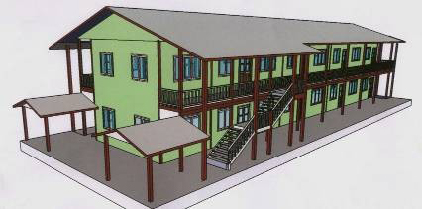
We quickly agreed on the design of a simple building, in wood, iron and brick. Once again I started appealing for donations without knowing if I would find funding for the project.
In the first days of April, during the stay of Mr. Gessner and after his visit of the almost finished building site, he agreed to finance the raising of the ground to keep students and teachers out of the water in all seasons.
In the exchange of emails that followed, I put forward to him the reasoning behind the project for the new building. Plans, raisings, estimates and completion dates followed.
Cost of the operation : 66 200 euros during Kyats on April 25th.
Convinced as to the importance of the extension as he was, as with the that of the repair works and the raising of the classrooms of the existing buildings as well as the entire surrounding ground so that the entire school was out of water, he asked me for time, time to study and present the project in Germany, time to present it to the STIFUNGLIFE office.
On May 2nd he confirmed an agreement for the funding of the new building.
On May 20th, planning permission was granted by the urban community of Rangoun and by the Minister of Education.
On May 24th, one week before lessons started again, we conducted the ceremony of marking the new foundations of the new building.
Why Tuesday rather than Monday, you might ask? Because Monday is considered, in popular Burmese superstition, to be an unlucky day, nothing new begins on Mondays in Myanmar.
The ceremony consisted of planting one of the corners of the future building, with a wooden, gold coloured stake and mallet on hand to help…
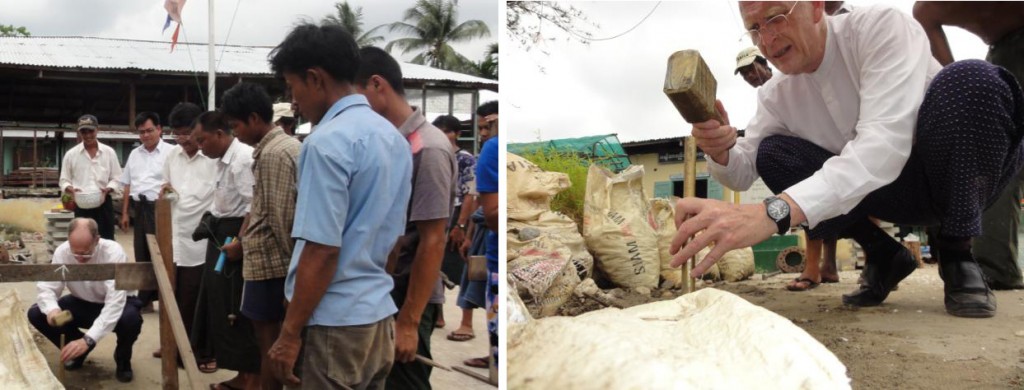
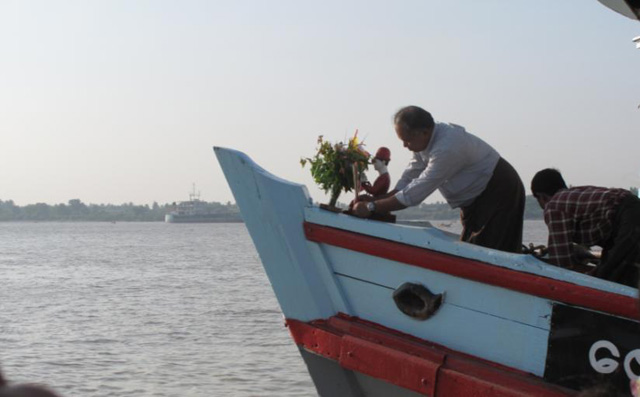
…and offerings to the spirits of fresh coconut, bananas, lucky leaves, sticks of burning incense, plans of the construction site slipped into the midst , and giving prayers to Buddha from the whole company.
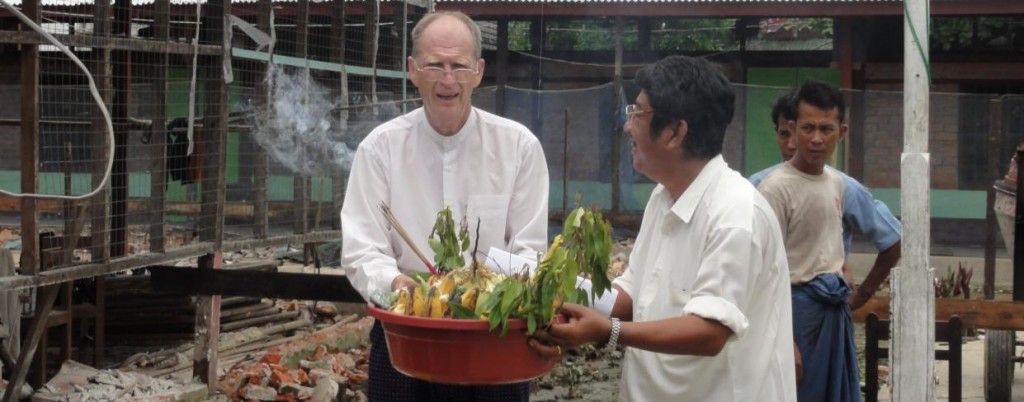
Then we had to sprinkle the perimeters of the construction site with a mixture of water and Tanaka, using the lucky leaf.
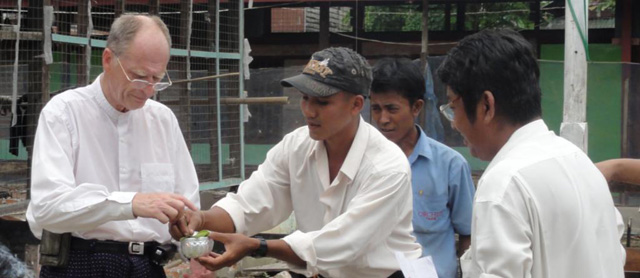
Then came the fun part for the workers on the site. They threw grains of puffed rice in to the air, to which were tied 100, 200, 500 and 1000 kyat notes.
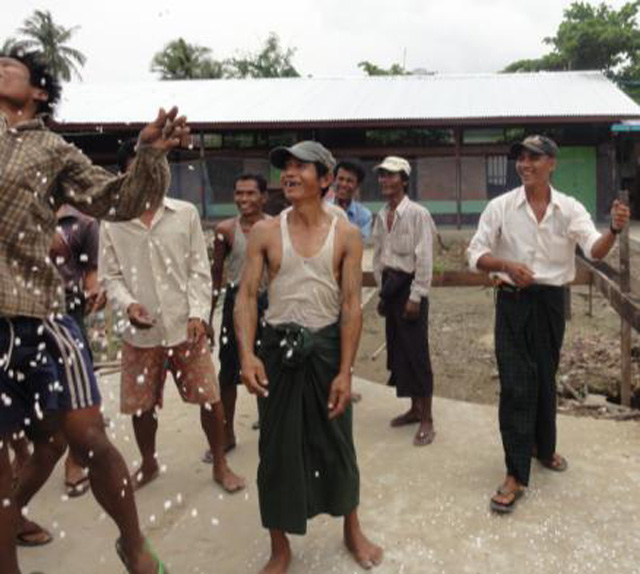
It soon became a free-for-all !
On June 1st, the pupils returned to a playground still under construction, but to a fully renovated premises, to the great surprise of students and families.
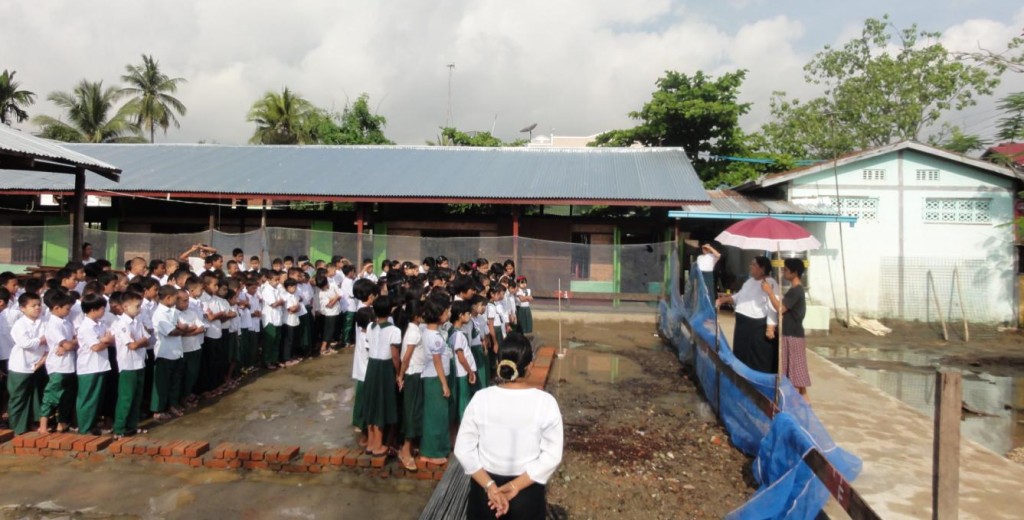
Once the bricklayers and carpenters have taken possession of the playground, the construction of the new building will begin.
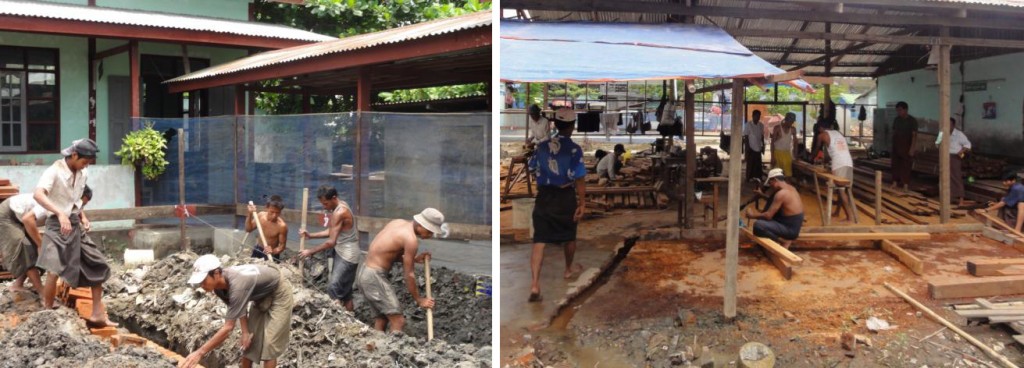
The new classrooms should be ready by the middle of October, for the start of the 2nd school trimester which happens after the holidays for the festival of light.
As of this June 30th, the new building has a roof.
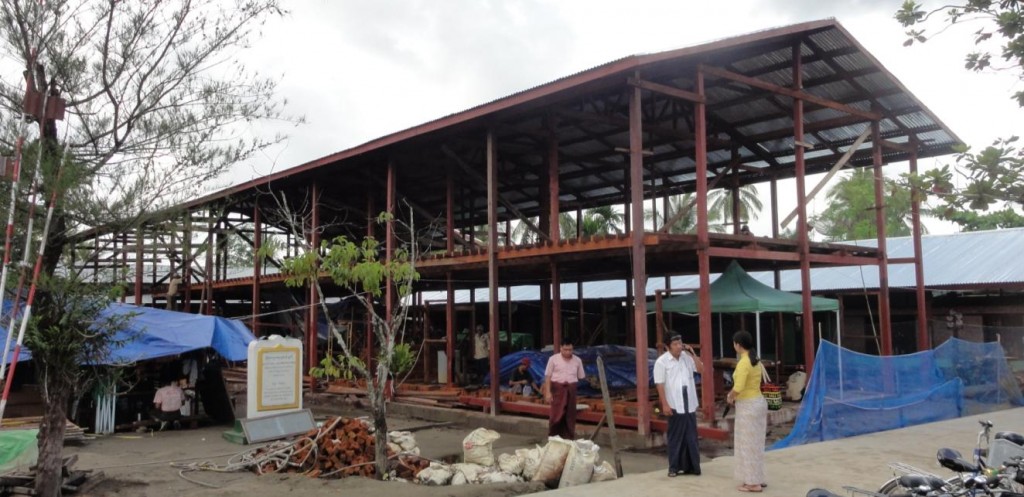
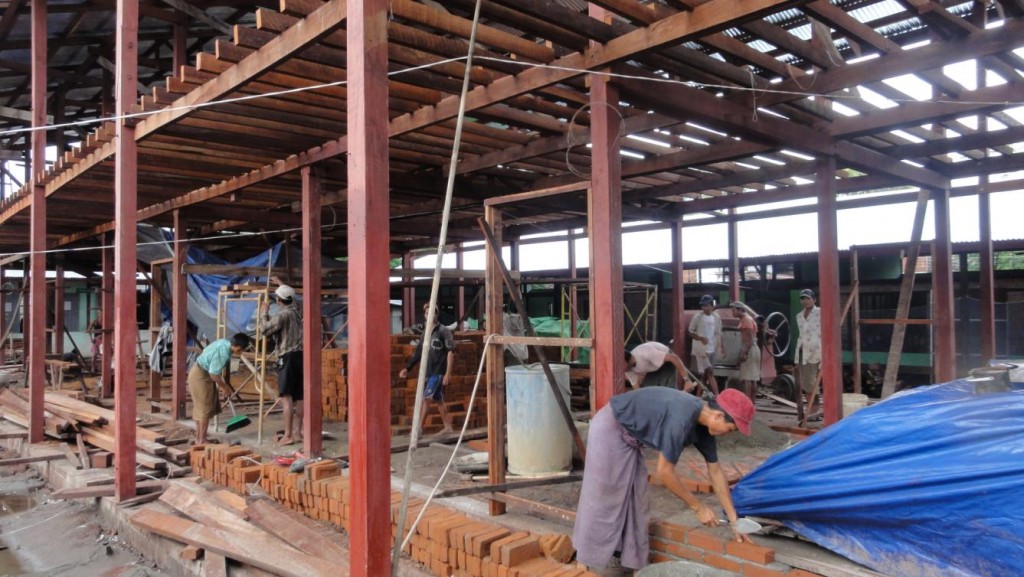
The builders start work on the walls.
–
Sponsor a child’s school fees
We are launching in the second semester a new initiative: Sponsorship.
If in Myanmar education was free, the families would only have to provide their children with textbooks and stationary so that they could continue their lessons.
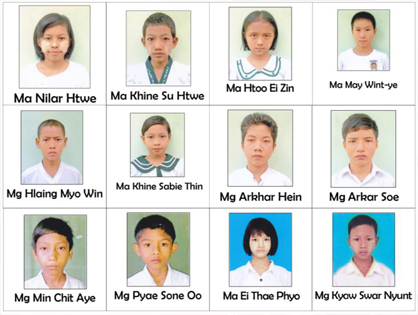
The cost per student is about 15 euros a month, or 150 euros for a school year. For those amongst you who would like to sponsor a child, we only ask for a donation of this amount, specifying whether you would rather sponsor a boy or a girl.
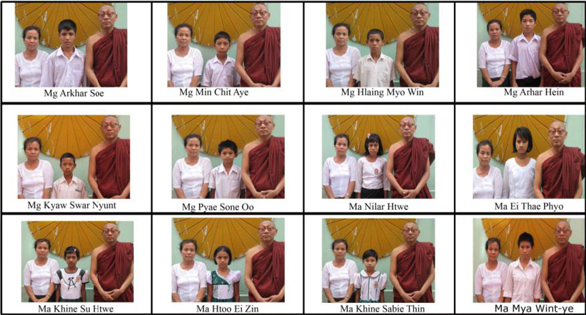
Along with the headteacher of the school, we would choose the student to benefit from the donation. We would let you know who they were, send a photo and some information on their curriculum and their family.
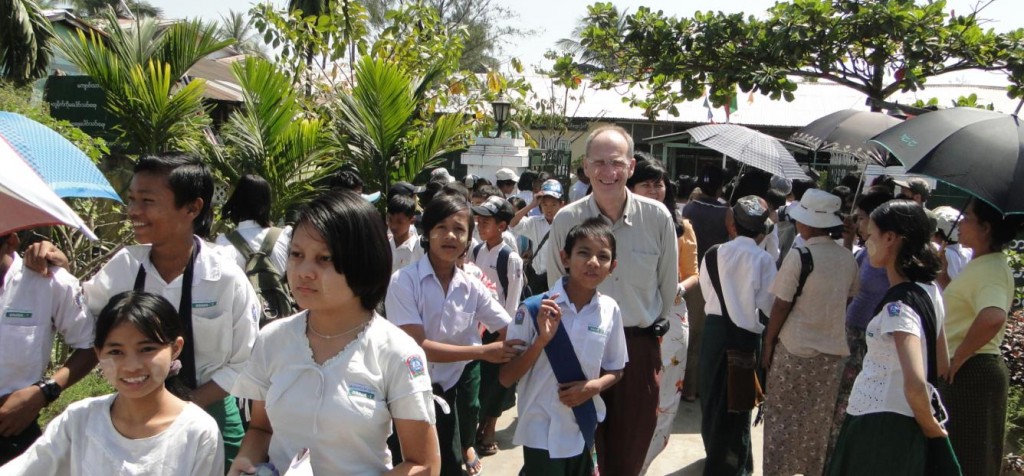
Anne Marie, Nicolas and I will write back to you in 6 months to relate the facts and figures of our actions in the 2nd trimester, which I have no doubt will be rich with news.
We thank you in advance for any donations, and want to express our gratitude for all that they allow us to do.
François Kenedi – Vice President

To support the actions of your organisation, please address your donations to :Zawgyi Care, Face au 52 quai le Gallo – 92100 Boulogne Billancourt – France
Download the form for making donations here


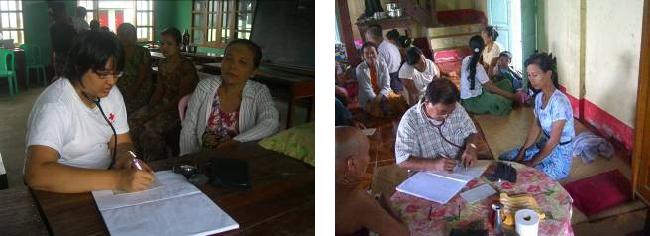
 Since the launch of our first « Swimming Doctors » boat, 14 missions have been carried out.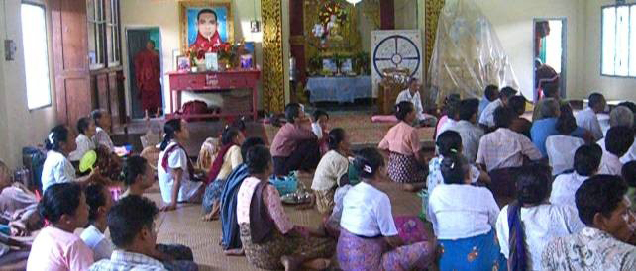
 Several children were born on board, some of which are most definitely from a whole different generation to their mothers, given that they were delivered feet first and born by caeserean section performed on board.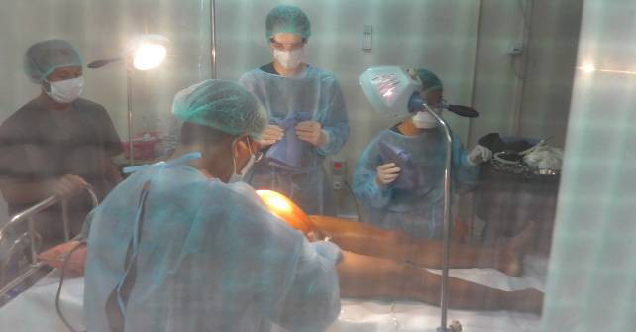
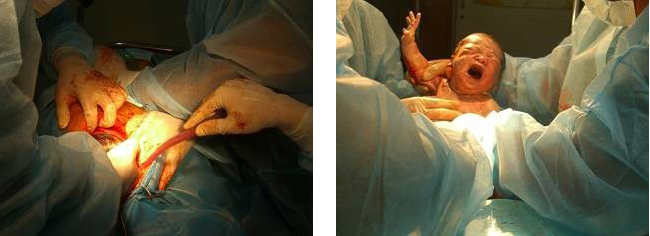 It is a Burmese tradition that it is the monk of the village who should name the child. Children are often given one of their parents’ names, and the concept of a surname doesn’t exist. Here’s a funny story: children who are born on board often are given “Zawgyi” as one of their names. Similarly, the little girl above, born on 18th October, is called Zawgyi Aye, while in another village, a boy was given the name of Zawgyi Tun Aung etc.
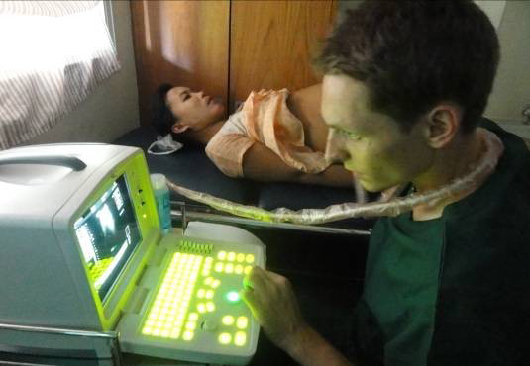
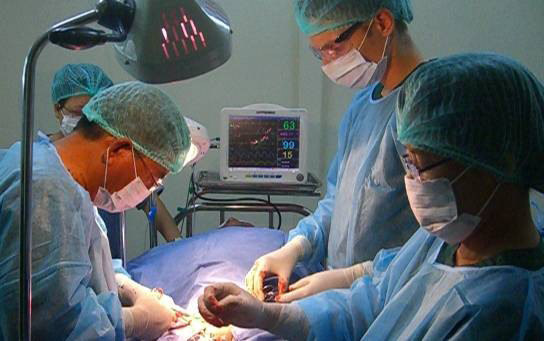 Since October and until the end of February we have a German doctor on board who specializes in ultrasound which improves the training of our doctor and two of our nurses.
 The solidarity of the village people is notorious. Just when it is necessary for one of them to have a blood transfusion, we immediately find a donor to obtain one or even several units of blood.
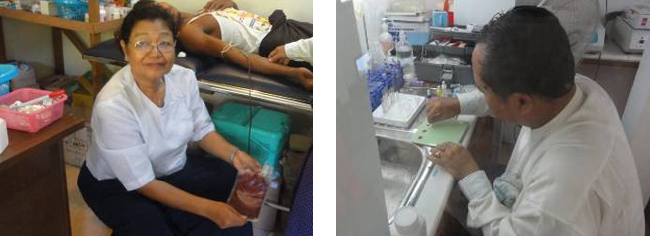 After the necessary checks have been carried out by our laboratory technician, the collected blood is transfused.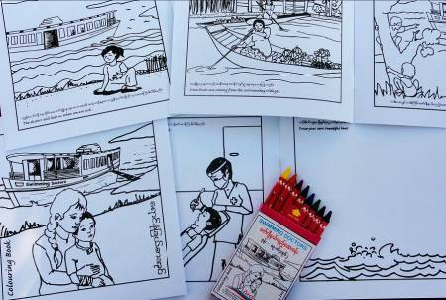
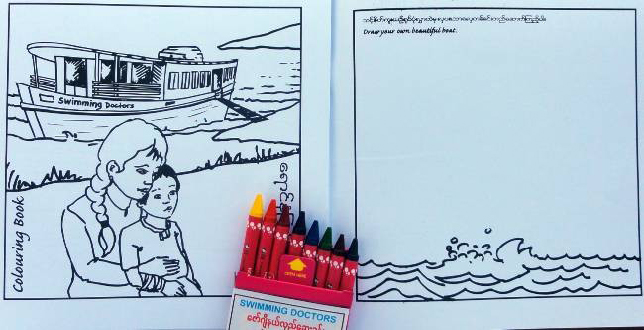 During the last months of 2012 these pages will be gathered up and presented to a panel of artists from the Fine Arts Academy in Myanmar. The three best drawings will allow these children’s villages to receive financial help in order to construct or renovate something or some shared equipment.
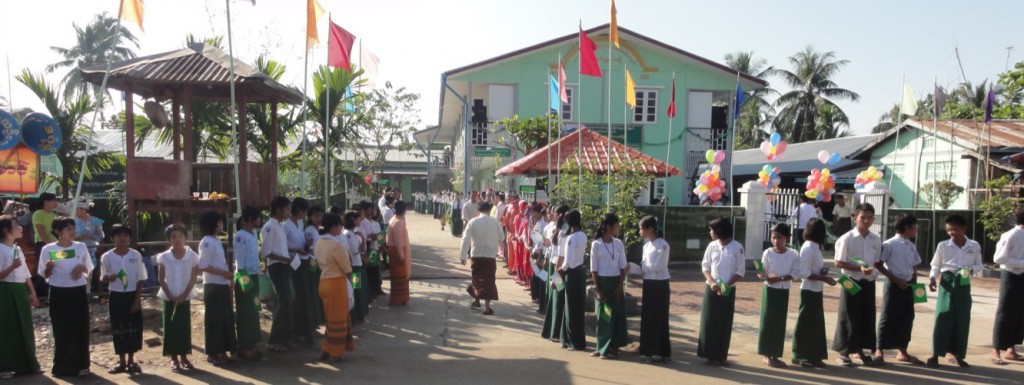
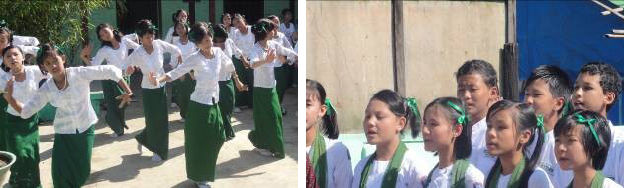
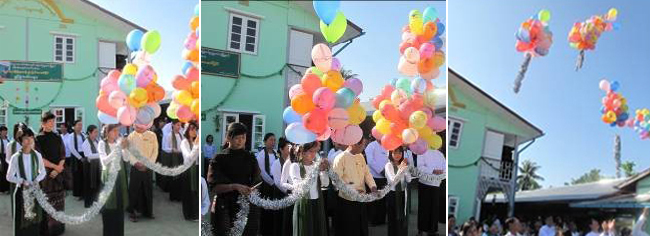 An extremely colourful, loud ceremony, with songs and traditional dances – in a word : very happy.
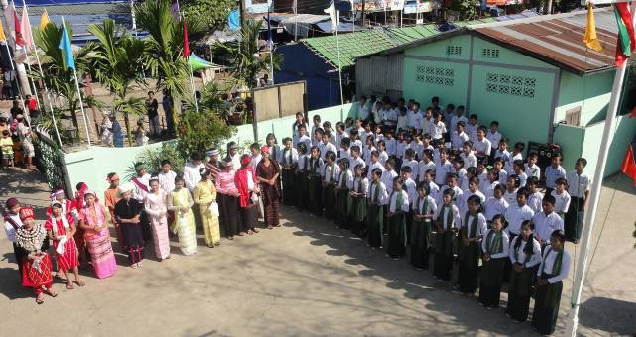 A double guard of honour was formed by the students and by teachers, wearing the local costume of the principal ethnic groups of Myanmar as it is still possible to see them in the countryside on market days and holidays.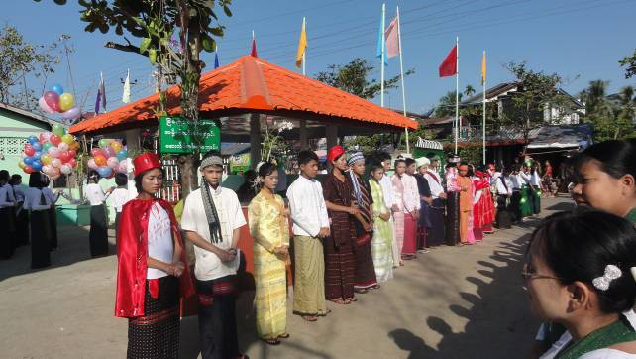
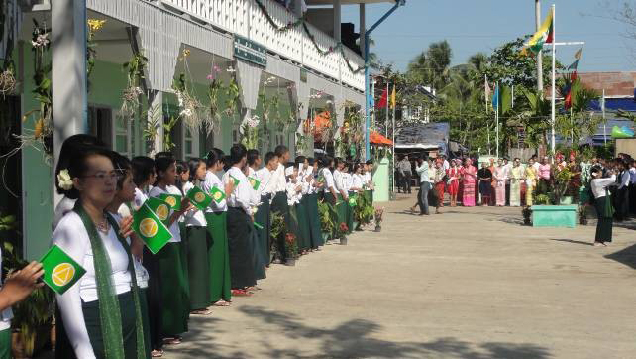 Here, one group danced and the other sang
 As everywhere, the arrival of the officials was solemn
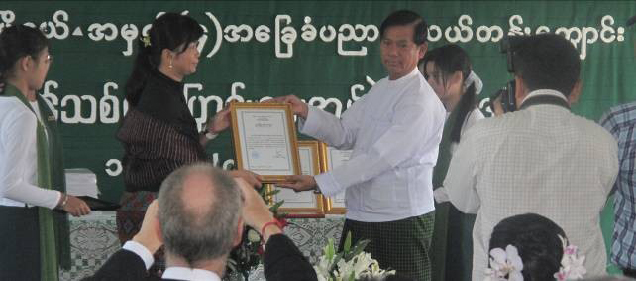
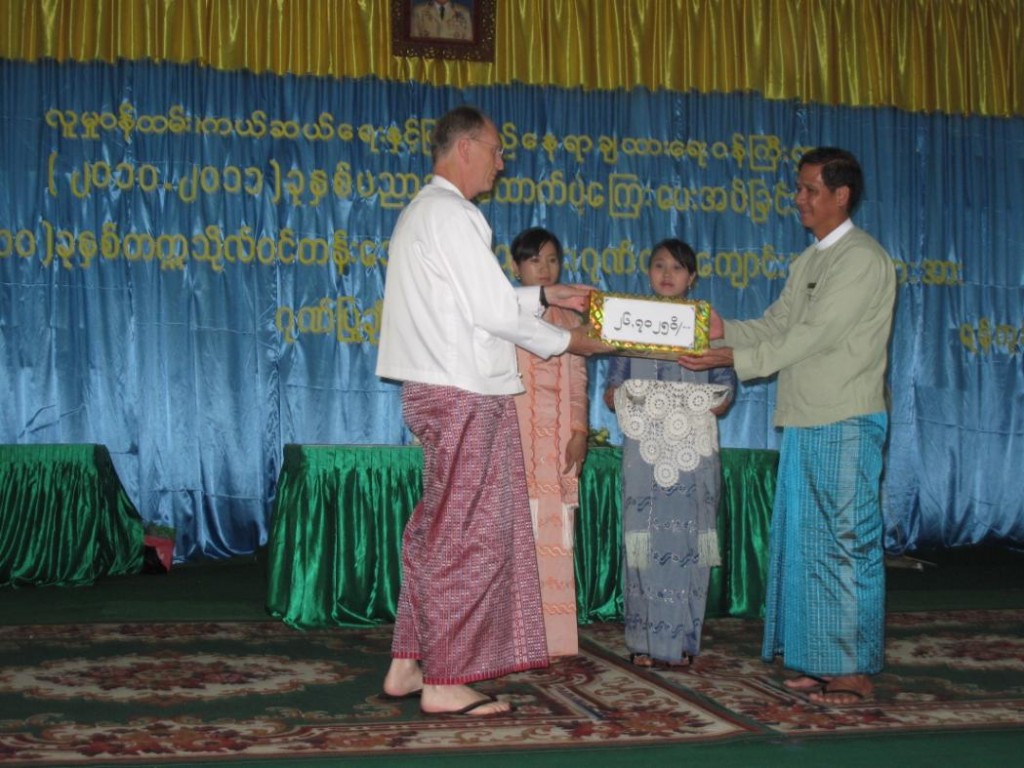
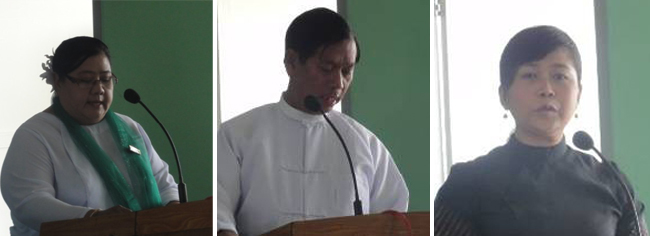 Then came the graduation to celebrate the event. Your association received a diploma which was given to Phyo.
 In our previous bulletin I showed you the illustration of how the new building constructed in the middle of the plot would look,
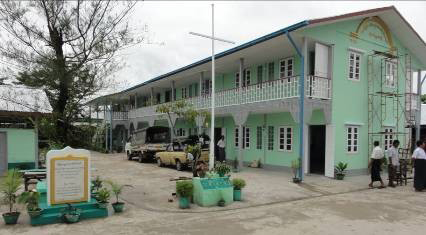
 Here it is completed.
 As a photo is worth more than a thousand words, here is the same classroom before and after in one of the renovated buildings.
 Here are the classrooms in the new building
 The entirety of the works, whether they were for the renovation of the 2 side buildings, the construction of the central building or the height extension of the whole plot, , with the view of being out of the water during the rainy season, was finished for €80,230, a cost-overrun of €230 compared to the initial cost estimate.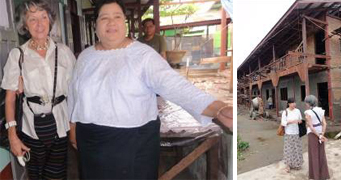
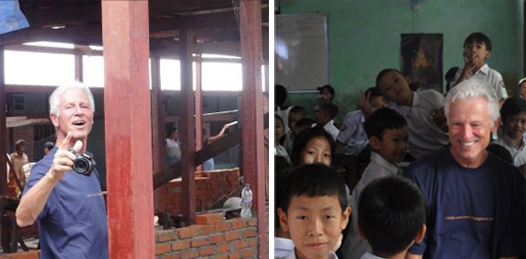 Also from Hong Kong was the d’Auriol family, who are members of our association. Coincidentally they were present at the time of the inauguration.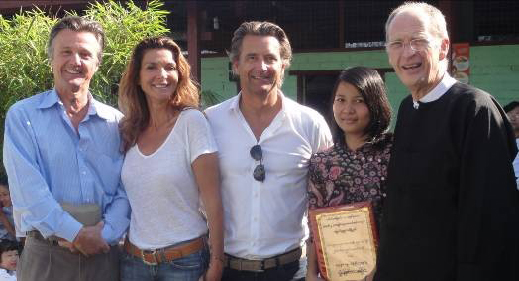
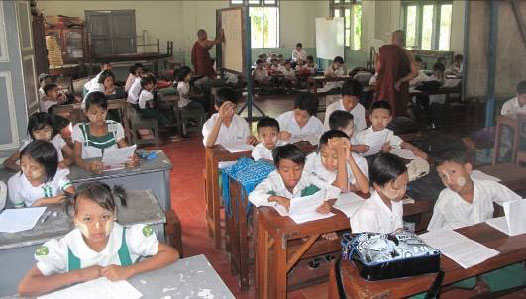 For those of you who would like to sponsor a child, you can just send us a donation, with the amount listed below, specifying whether you would like the recipient to be a boy or a girl. Tuition fees per child are €15 a month, or €150 for one school year.

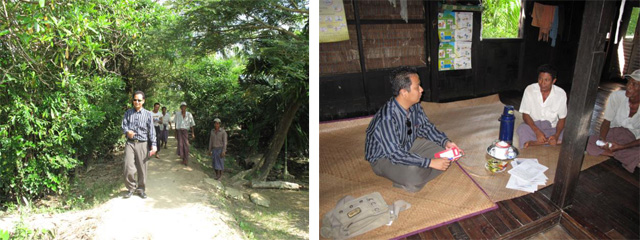






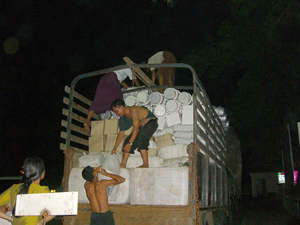
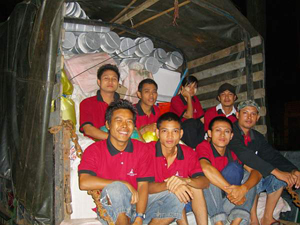
 La lune est déjà haute lorsque nous montons à bord des deux barques de pécheurs qui nous ramènent au pont de Dedaye où le camion nous attend depuis 9 heures du matin. Trois heures plus tard après être tombé en panne d’essence pour cause de réservoir trop petit pour la distance (une bouteille d’eau en plastique d’un litre) nous le retrouvons et après encore trois heures de route dont je vous fais la grâce de ne pas vous narrer les ecchymoses qui en résultent, nous finissons cette journée commencée 23 heures plus tôt.